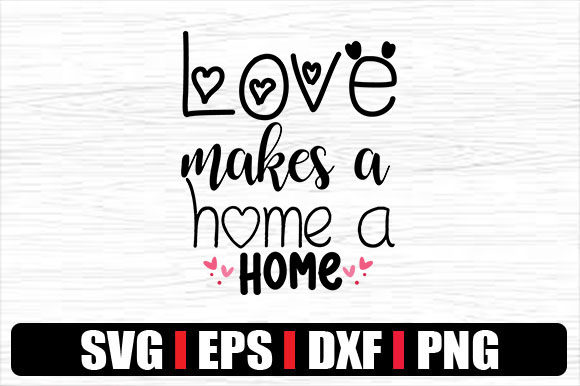
Love Makes a Home a Home Embroidery Review
As an embroidery designer who spends half my life agonizing over stitch density and the other half worrying about whether a client will actually like the final product, I approach every new digital asset with a healthy dose of skepticism. The market is flooded with generic quotes, so finding something that feels both authentic and technically viable for production is rare. Recently, I pulled Love Makes a Home a Home from the Crafts and Graphics category to test its viability for real-world projects. This isn't just another Valentine’s Day clipart; it is a vector SVG file that promises versatility across mugs, t-shirts, bags, cards, and invitations, complete with transparent PNGs. But does it hold up under the needle? Here is my practical breakdown of how this design performs in actual embroidery situations.
First Impressions and Visual Personality
When you first load the file into your digitizing software or preview it on a mockup, the mood is immediately warm. The phrase "Love Makes a Home a Home" carries a specific emotional weight—it speaks to domesticity, comfort, and belonging. Visually, the layout strikes a balance between decorative and legible. It doesn’t scream for attention like a bold graphic tee design; instead, it whispers, which is often where the most successful handmade products live.
The visual personality of this design leans toward rustic charm and modern farmhouse aesthetics. It feels right at home on natural fabrics like linen, cotton, or denim. If you are looking for something sleek and minimalist for high-end corporate branding, this might not be your pick. However, for the craft business owner targeting Etsy sellers, boutique shoppers, or hobbyists who value sentimentality, this design hits the sweet spot. It creates an immediate connection with the viewer, suggesting that the finished product is not just an object, but a piece of their personal narrative.
Real-World Application: From Screen to Stitch
I decided to put this design through its paces by simulating several common small shop product scenarios. The primary use case for this type of quote is clearly personalized gifts and holiday embroidery. Imagine preparing a custom embroidered tote bag for a housewarming gift or creating a batch of aprons for a wedding shower. In these contexts, the design’s readability is paramount.
For sweatshirt embroidery, this design excels. The soft curves and flowing nature of the text work beautifully on the heavy fabric of a hoodie, adding a layer of coziness that complements the garment’s purpose. Similarly, for baby embroidery, such as on a onesie or nursery decor, the gentle message aligns perfectly with the tender aesthetic parents seek. I also tested it mentally on kitchen towels and tea towels. Because the design is likely compact enough to fit standard hoop sizes without feeling cramped, it works exceptionally well for tote bag design iterations or as a focal point on a canvas bag.
Another strong contender for this asset is the embroidered patch. If you are selling patches to DIY enthusiasts who want to add personality to jackets or backpacks, this design offers enough detail to look intricate but enough white space to remain clear when stitched small. It transforms a simple accessory into a statement piece, increasing the perceived value of the handmade product.
Where to Exercise Caution
No design is universal, and knowing where Love Makes a Home a Home might struggle is just as important as knowing where it shines. I would advise caution when attempting to stitch this on textured fabrics like bouclé wool or heavily napped fleece. The stitch definition could get lost, turning a beautiful quote into a muddy blob. Similarly, thin or stretchy fabrics require careful hooping and stabilizer selection; if the fabric puckers, the integrity of the lettering will suffer.
Curved surfaces, such as caps or hats, present another challenge. While the design might look flat and perfect in a digital preview, wrapping it around the crown of a cap can distort the spacing between words unless you have advanced digitizing skills to compensate for the curvature. Additionally, if you plan to scale this down significantly for tiny details, inspect the smallest letters closely. Tiny lettering in machine embroidery often suffers from thread breakage or poor registration, especially if the stitch density is too high for the reduced size.
Dark fabrics also require thoughtful thread color selection. A light-colored script on a dark background can sometimes lack contrast depending on the lighting conditions of your photoshoot. Always test thread colors against your actual fabric swatches before committing to a large production run.
Impact on Product Value and Brand Consistency
From a commercial standpoint, using a cohesive design like this enhances brand consistency. For an Etsy seller or small shop product creator, having a library of designs that share a similar emotional tone helps build a recognizable aesthetic. Customers trust brands that feel curated. When a buyer sees "Love Makes a Home a Home" alongside other complementary designs, they perceive a level of professionalism and care that drives engagement.
This design also boosts giftability. In the world of personalized gifts, the message is often as valuable as the medium. By offering a design that articulates love and home, you are providing customers with a way to express feelings they might otherwise struggle to verbalize. This emotional resonance translates directly into higher conversion rates and positive reviews for your finished product.
Practical Designer Notes for Implementation
Before you upload this file to your embroidery machine or send it to a print-on-demand service, follow these practical steps to ensure success:
- Test on Scrap Fabric: Never assume a digital preview matches the physical outcome. Stitch a sample on the exact fabric type you plan to sell.
- Check Thread Contrast: Evaluate how different thread colors interact with your base fabric. Light threads on dark fabric may require a backing to prevent show-through.
- Review Stitch Density: Ensure the stitch density is appropriate for the fabric weight. Too dense, and the fabric will pucker; too sparse, and the design will look weak.
- Confirm Hoop Size: Verify that the hoop size accommodates the design dimensions without awkward cropping, especially if you are working with limited equipment.
- Inspect Small Details: Zoom in on the corners and intersections of letters. Are there any potential thread breaks or tangled messes?
- Use Proper Stabilizer: The choice of stabilizer (cut-away vs. tear-away) can make or break the longevity of the embroidery, particularly for items that will undergo frequent washing.
- Verify Licensing: Since this is a digital asset, confirm whether the license allows for commercial use of the finished product. Some digital embroidery files restrict resale, while others permit it.
- Black and White Mockups: View the design in grayscale to check for balance and contrast issues that color might hide.
In conclusion, Love Makes a Home a Home is a versatile, emotionally resonant addition to any designer’s toolkit. It bridges the gap between sentimental appeal and technical feasibility, making it an excellent choice for custom apparel, holiday embroidery, and commercial embroidery projects. By respecting its limitations and leveraging its strengths, you can create professional, high-quality items that customers will cherish.